

Hi-Fi Basics: Passive or active preamp? Start with the system
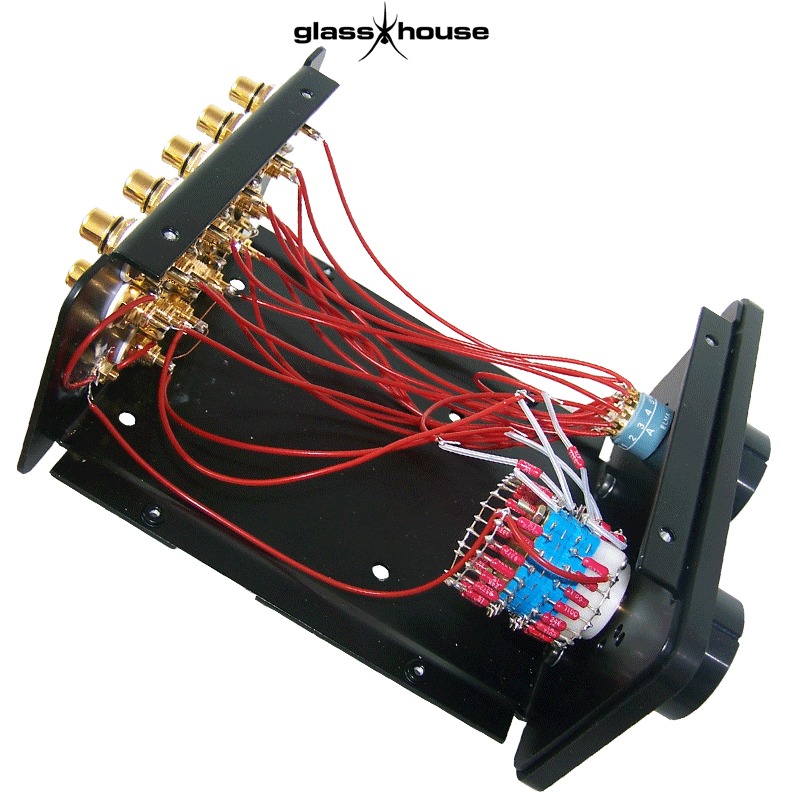
A passive preamp can provide volume control and source selection without an active amplification stage in the audio path. An active preamp adds powered circuitry, which can provide extra gain or help the source drive the equipment connected to it. Which you need depends on the system, rather than either approach being automatically better.
The name can be misleading: a preamp does not always need to make the signal louder. Your DAC or CD player may already supply enough level for the power amplifier. What you still need is a convenient way to choose a source and turn it down.
What a passive preamp does
Here we're looking at resistive passive controls, which use a volume control to reduce the incoming signal. They cannot add voltage gain. If the source does not provide enough level for the power amplifier, a resistive passive cannot make up the difference. Transformer-based passive controls are a different design and aren't covered here.
Our Glasshouse Passive Pre-amplifier kit shows how this works in practice. It has six stereo RCA inputs for source selection, with a stepped attenuator chosen separately to control the volume. Allow for that separate component when planning the build; it isn't included with the basic kit.
For a system with compatible equipment and enough source output, this can cover the everyday jobs of selecting music and setting the listening level. There is no need to add gain simply because the control box sits between a source and a power amp.
Why choose an active stage?
Gain is one reason. An active line stage can increase the signal voltage when the source and power amplifier need that help. Another is buffering: a buffer makes the electrical connection between the source and the following equipment less demanding, without necessarily increasing the signal voltage.
That distinction matters when comparing preamps. An active design with no extra voltage gain can still have a purpose. Look at what its circuitry does, rather than assuming “active” just means louder.
A resistive passive needs particular care with matching because there is no active buffer separating the source from the amplifier and connecting cable. The source's output impedance, amplifier's input impedance and cable capacitance all play a part. You don't need to turn choosing a preamp into a circuit-design exercise, but these are worth checking for the actual equipment you own.
If the figures are unclear, give the preamp or equipment maker the source and amplifier model numbers, plus the intended cable length. That's enough to start a useful compatibility discussion. A blanket rule about all passive preamps won't settle it.
Choosing for everyday use
Alongside electrical matching, make a short list of the facilities you want. How many sources will you connect? Do you need remote volume, a mute function or balance adjustment? Check the particular design for those features; the passive or active label alone doesn't describe the controls you'll use.
Also keep a line preamp separate from a phono stage in your planning. A conventional turntable cartridge still needs suitable phono amplification and equalisation before the line stage. Our phono-stage guide covers that part of the system.
We'd start with the source, power amp and facilities you need, then compare preamps that suit them. Simpler circuitry isn't a promise of better sound, and extra circuitry isn't a fault. What matters is whether it has a job to do in your system.